
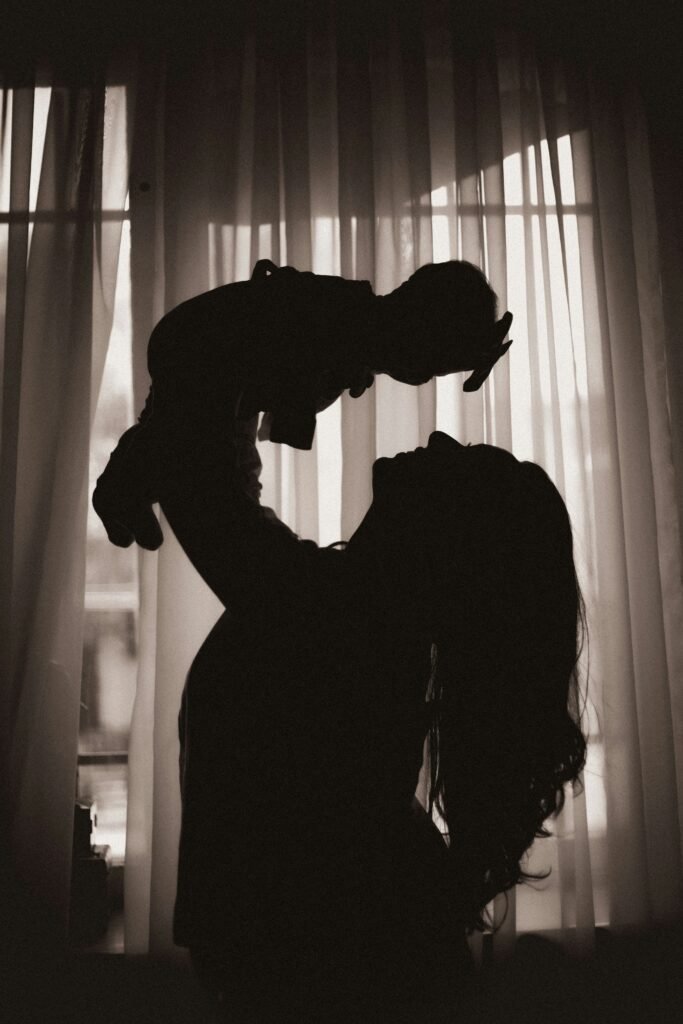
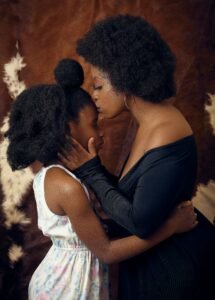
A few days ago, I watched Hotel Rwanda with coursemates in class as part of a media course requirement. While the film—centering on the historical Rwandan Genocide—played on, someone close to me said what we have all been taught to say in moments of mass violence: women and children should be saved first. Men, they added, should fight. I smiled and then shook my head.
They weren’t wrong, because society has continually lumped female adults in the same category as growing children, all to drive home one point: women are never full adults.It sounds compassionate, especially during wartime or disaster, to say let’s save the women and children first. Like in the Titanic, where women and children were rescued first. It was bravery on the part of men to choose selflessness by staying behind while women and children were saved. Albeit, many women would never demand “women and children first.” Society, as a result of repeated narratives, made that choice for them, just like the choice was made for children who are still dependent and vulnerable.
While this coursemate, with others, reiterated the same societal script, something about it stayed with me long after the discussion moved on. Long after war and disaster, the statement “women and children” stays and becomes a weapon in the denial of women’s power and agency. It says: “Men continually take the risks, wage war, become heroes, defend and save mankind, protect women and children, while all you (women) did was be saved.” Invariably, men earned their rights to authority; women, although they neither actively nor subtly demanded it, were helped. Hence, the ultimate proof of female inferiority and male superiority.And so, I keep asking a question we rarely allow ourselves to ask: who put women in the same category as children in the first place?
The Merriam-Webster dictionary offers several definitions of the word “child.” One is “a young person especially between infancy and puberty.” Another definition, which sits broadly on neutrality, is “one strongly influenced by another or by a place or state of affairs.” From these two definitions, one can say a child is a developing offspring below the legal age and, perhaps, strongly influenced by another. Its synonyms are minor, juvenile, etc., while its antonym is adult.
A woman, according to the Merriam-Webster dictionary, is “an adult female person.” The word “adult” means “fully developed and mature.” So, a woman is a fully developed and mature female person. Some of its synonyms include grown-up, senior, old-timer, etc., while its antonyms are child, kid, etc.So, isn’t it antithetical to pair women with children, semantic-wise?
Well, this is not a coincidence. As Chimamanda Ngozi Adichie notes in Dear Ijeawele, “Language is the repository of our prejudices, our beliefs, our assumptions.” The persistent pairing of women with children reflects society’s assumptions about women’s capacity for autonomy, authority, power and full adulthood.
Judith Butler explains in Gender Trouble that gender is “the repeated stylization of the body, a set of repeated acts within a highly rigid regulatory frame.” The roles society assigns women through language become repeated performances, convincing everyone what femininity should be. Therefore, grouping women with children aims at denying them adulthood socially and linguistically.
This framing is clear in conflict. In Hotel Rwanda, no female combatants or rebel appear; only men fight, while women are cast as victims in need of saving. Even the brave Madam Archer, who risks her life to save orphans, reinforces the moral story: women need saving, men are the heroes. And if women fight, it’s often from a place of “maternal urge” or “emotion,” not as duty or contribution to the safety and security in a larger spectrum.But this is not about biology, but the systemic structures that limit women’s roles and tell them who they are and should be. Good women, the narrative insists, don’t fight, curse, rebel, or assert themselves.
Across history and legend, the pattern persists. In the Chinese legend Mulan, women were forbidden to bear arms, and Mulan is called a “witch” in battle and said to have brought “dishonor” to her family for defying this rule. In World War I and II, women were largely restricted to nursing and cooking. Those who did partake actively in the war, like Nancy Wake during World War II, nicknamed “The White Mouse,” had to prove themselves repeatedly, while men were trusted by default. Women’s adulthood and capability are always conditional; their power constantly questioned
This is not to deny or erase women’s suffering, especially during wartime. No—the point is that the suffering of male adults is never grouped with that of children, so the suffering of women should be recognized as full gendered violence, not simply as part of a collective victimhood.
The lumping of women and children in the same category is one reason why gendered violence during wartime is often referred to by media as general violence rather than as targeted attacks on women.
In Hotel Rwanda, the specific experiences of Tutsi women were not highlighted; instead, the emphasis was on the collective violence and displacement of people. At George Rutaganda’s place, Tutsi women were stripped and held in a cage, and George referred to them as “Tutsi whores and witches”—a strong indication that sexual violence took place on the premises. How many accounts were made of women abused, raped, or impregnated by the Interahamwe or the rebels? Almost none. When recorded in the Rwanda genocide, such accounts are often relegated to footnotes within the broader narrative of violence.
History and contemporary conflicts offer further examples. One of the most notorious examples of gendered violence was the rape of Nanjing, China commonly referred to as Nanjing Massacre where no fewer than 20,000 females were raped following the siege.This violence was symbolic: women’s bodies became sites for power, control, and the defilement of the land.
In Northern Nigeria, during the peak of the insurgency, schoolgirls were abducted, raped, forcibly married, and used as bargaining tools in negotiations with the government. Some are still missing. Yet media often frames these atrocities under the blanket term “women and children,” obscuring the gendered strategy behind the violence. Gendered violence targets women and girls.
This pattern is not coincidental. Northern Nigeria, for instance, has a large gender gap in education, with girls more likely to drop out than boys. Cultural and religious biases, combined with systemic feminization of poverty, leave women disproportionately vulnerable.By treating gendered violence as collateral damage through the grouping of women with children, their suffering is softened and downplayed. Sexual violence becomes tragedy, not strategy, and trauma becomes personal, not political.
And as is often argued that men die more than women in wartimes and disasters, and used in dismissing women’s demand for autonomy and agency,this brings me to the uncomfortable question people avoid: who actually has it worse in war?
Yes, men often die in greater numbers. That fact is frequently cited and is equally disheartening, but women often endure prolonged suffering that extends beyond death: sexual violence, reproductive control, social exile, and lifelong trauma. Many victims of sexual violence have often pleaded for death following their ordeal; death, to them, was mercy in the face of the trauma they live with. Females constitute over 50% the population of refugees worldwide and are very marginalized.
Female victims of the insurgency face stigmatization while “repentant terrorists” are paid and reintegrated into society easily under policies such as “arms for cows” . Some female victims are married off by their families following their ordeals in captivity to older men in order to cover their “shame.” A misfortune they never asked for ended up becoming their flaw.
This is the cost of infantilizing language and culture. The repeated pairing of women with children is not an innocent phrase. It is a linguistic and cultural mechanism that diminishes women’s adulthood and agency.
From films like Hotel Rwanda to historical conflicts and contemporary insurgencies, women’s experiences are often recorded as collateral or footnotes, while men’s actions are celebrated and normalized.This is not merely a matter of semantics; it has tangible consequences, from stigmatization and limited opportunity to social erasure. To acknowledge women’s full humanity, society must recognize their suffering, bravery, autonomy, and agency as distinct and complete—not grouped with children. Until society stops infantilizing women in language, culture, media, and policy, their suffering will remain invisible, and their power and potential will continue to be undermined.